Brandenberger appointed
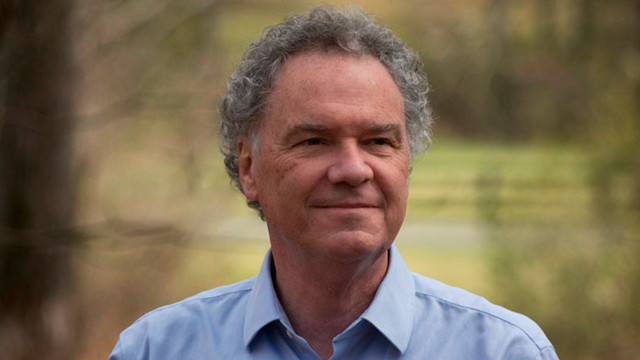
David Brandenberger, professor of history and global studies, was appointed Samuel Chiles Mitchell-Jacob Billikopf Professor of History and Global Studies.

In an era of "don't say gay" laws, Dr. Pippa Holloway, Cornerstones Chair in History, believes in the relevance and importance of teaching LGBT history to students for what they learn about courts, the Constitution, civil rights, and America as a whole.
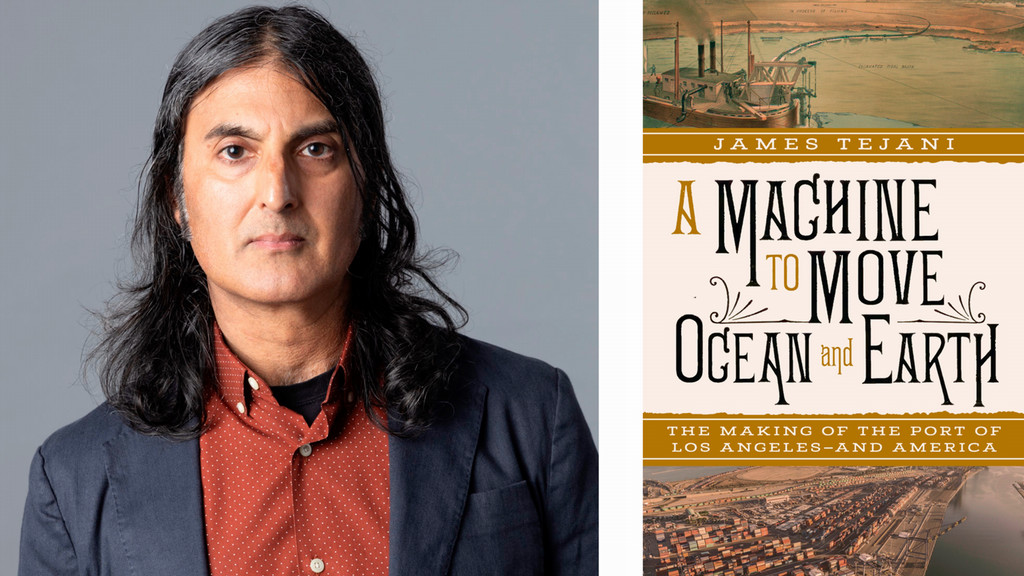
Wednesday, Oct. 21 | Lecture at 5:30pm | Humanities Commons 220
In April 1865, Major General Edward Ord posed for photographer Mathew Brady in downtown
Richmond, at the former executive mansion of the Confederacy. Yet this image of the Union
Army’s triumph over secession and slavery has long kept a secret in plain sight: histories that
extend across the continent, from Washington, DC, through Indian lands and the Hispanic
Southwest, to the Pacific Ocean, and back again.
In this year’s lecture, author James Tejani will explore the photograph’s backstory amid
territorial expansion, California land schemes, and the complex politics of slavery and western
conquest. The lecture will reveal how these antebellum connections gave rise to a defining
institution of our time, the Port of Los Angeles (the nation’s busiest container port). Finally, the
talk will examine how the Ord image speaks both to the challenge and great promise of
interpreting history during moments of drastic social change.
James Tejani is an Associate Professor at California State University and an elected member of the Society of American Historians. His book, A Machine to Move Ocean and Earth, won the 2025 Bancroj Prize.
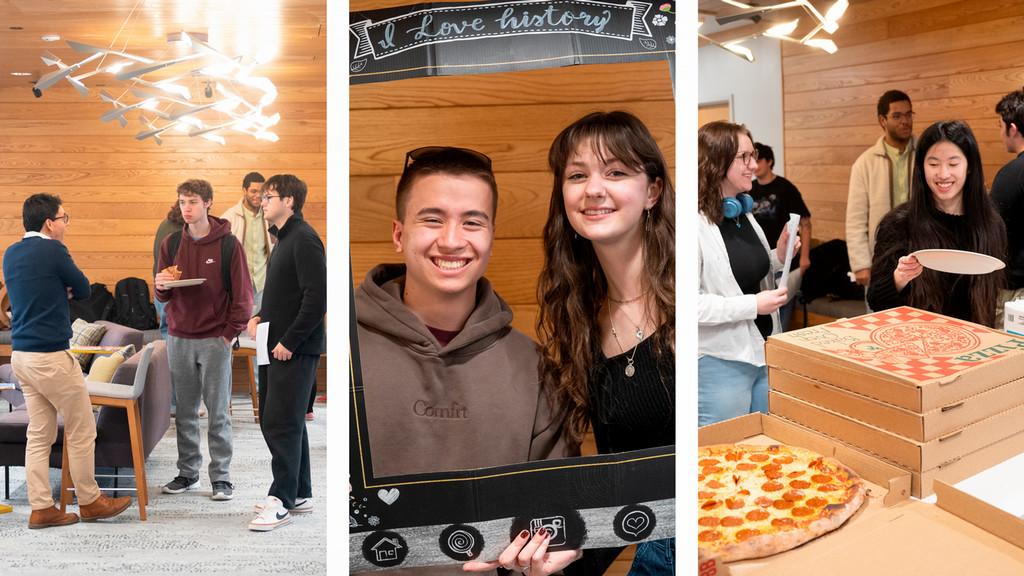
Are you interested in history? Curious about what you can do with a degree in history? Wondering what history classes you should take spring semester?
Come join professors from the History Department and fellow classmates to learn about course offerings for spring 2027 before they’re released on Bannerweb!
Snag some brand new department merch!
All students are welcome!
Pizza from Zorch will be provided.
Questions? Please email David Brandenberger, Chair of the History Department.
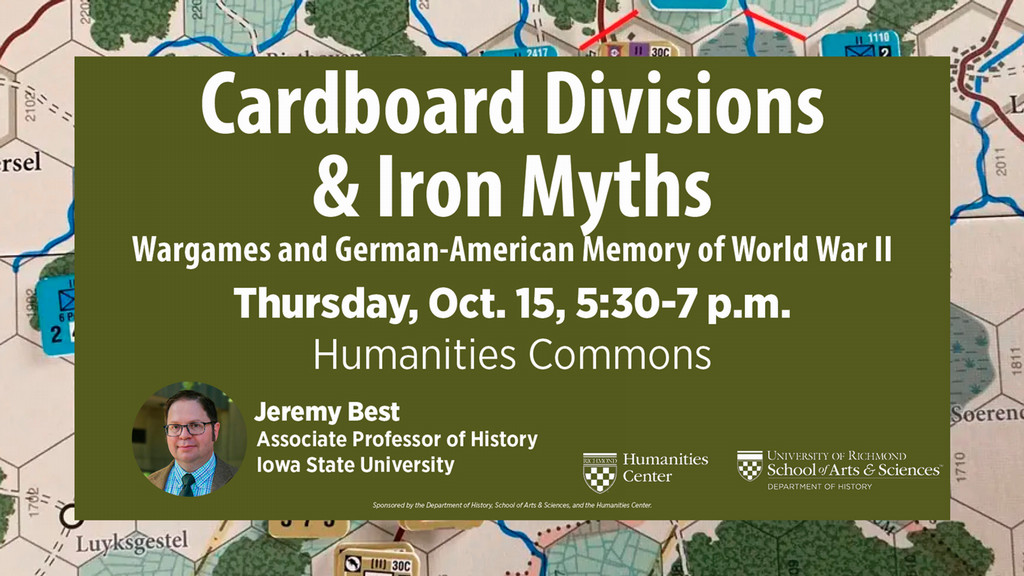
Thursday, Oct. 15 | Lecture at 5:30pm | Humanities Commons 220
In 1958 Charles S. Roberts invented the modern tabletop wargame with his release of Tactics. Within a decade, his company, Avalon Hill, faced off against competitors who all fought for a voracious audience of young wargamers. One of the most important qualities a game could have to drive sales was its “authenticity.” Designers claimed for themselves the authority of historians, and they used the tools of historians to legitimate the games they created. Rulebooks included appendices and bibliographies, consumers and designers argued for the accuracy of the history depicted on the battlefield. In this quest for authority, game designers fell into a trap laid for them twenty-plus years before – the games they created about World War II presented the German Wehrmacht in that war as honorable, skilled, brave – but not criminal. By the 1970s, the so-called Myth of the Clean Wehrmacht found a new tool for exonerating German generals for war crimes and genocide. To date, the Myth remains core to much of computer and tabletop games about World War II. In this talk, Professor Jeremy Best details the history of this process – how Americans participated in the dissemination of the Clean Wehrmacht Myth, how hobby wargamers integrated it into their games, how the Myth was re-exported to West Germany, and what the implications might be for gamers today.
This lecture will be given by Jeremy Best. Dr. Best is an award-winning historian of modern Germany at Iowa State University. His research on the history of race, religion, and culture in nineteenth- and twentieth-century Germany has won multiple fellowships and awards. He is especially interested in the history of imagination; the construction of meaning by people and institutions in the past through fantasy, the articulation of those fantasies through cultural expression, and the transformation of that meaning into concrete policy behavior and goals.
David Brandenberger, professor of history and global studies, was appointed Samuel Chiles Mitchell-Jacob Billikopf Professor of History and Global Studies.
Michelle Kahn, associate professor of history, won the Waterloo Centre for German Studies Book Prize for her book Foreign in Two Homelands: Racism, Return Migration, and Turkish-German History.

Pippa Holloway, Cornerstones Chair in History, testified as an expert witness in a special three judge panel trial court in the Shelby County (Tennessee) Circuit Court. The case, Moses v. Goins et al., challenges a law that permanently disfranchises Tennessee citizens following a felony conviction. Holloway presented historical testimony that included a historical analysis of the Free and Equal Elections clause of the Tennessee Constitution, which requires conviction by a jury before a person otherwise entitled to vote could be denied suffrage on the basis of a criminal conviction.

Jillean McCommons, assistant professor of history and Africana studies, published "From Their Double Minority Position": Black Women's Leadership, Black Feminist Thought, and the Black Appalachian Commission, 1969-1975" in the Register of the Kentucky Historical Society.


History professor Pippa Holloway is interviewed.

History professor David Routt, a medieval historian, is quoted.

History professor Pippa Holloway co-authored this piece.

History professor Eric Yellin, an expert on Woodrow Wilson, is quoted.
Mailing address:
History Department
Humanities Building
106 UR Drive
University of Richmond, VA 23173
Phone: (804) 287-6041
Fax: (804) 287-1992
Department Chair: Dr. Pippa Holloway
Academic Administrative Coordinator: Catherine Hash